
 EN
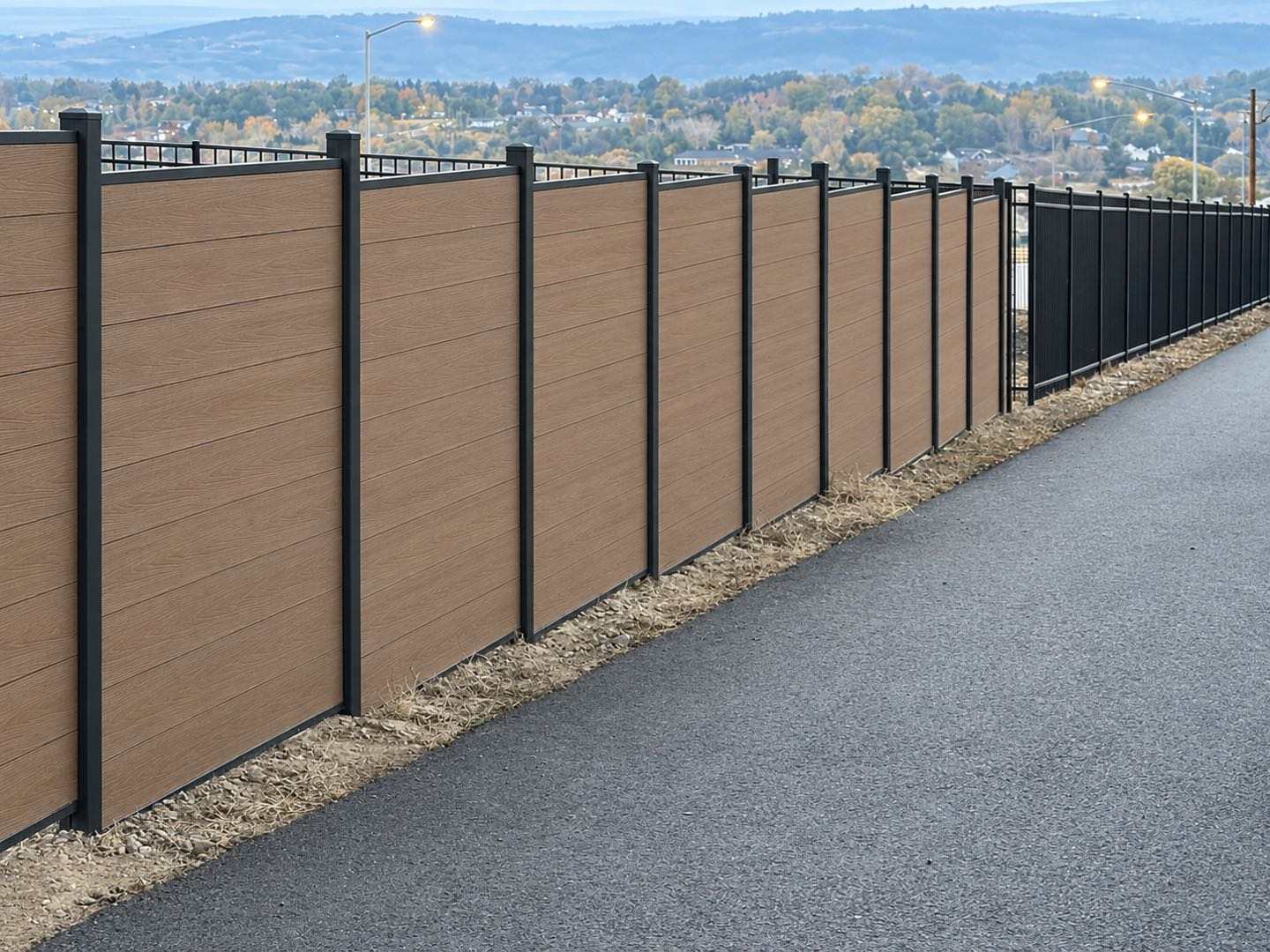
The WPC Composite Privacy Fence is an outdoor screening system that combines WPC panels with aluminum posts for residential and commercial boundaries. U.S. Census and HUD data show single-family housing starts running at an annualized 859,000 units in September 2026, indicating continuing demand for exterior products that define, screen and organize American properties.
7 U.S. Applications for a WPC Composite Privacy Fence
U.S. applications for a WPC composite privacy fence extend from suburban backyards to hospitality properties because the modular panel-and-post system can address privacy, visual separation and property organization without copying the maintenance cycle of painted wood.
1. Suburban Backyards and Side-Yard Boundaries
Suburban backyards use WPC fencing to screen patios, play areas and neighboring sightlines while maintaining a coordinated exterior finish. Full-privacy panel layouts are especially relevant where homeowners want fewer open sightlines than picket or ornamental fence styles provide.
Before installation, the owner should confirm the surveyed property line, easements, setbacks, permitted height and any homeowners association rules. Requirements vary by city and neighborhood, so a design that is acceptable in one U.S. jurisdiction may require revision in another.
2. New Single-Family Housing and Planned Communities
New single-family housing can use a repeatable WPC fence module to create consistent lot boundaries across several homes. The September 2026 annualized rate of 859,000 single-family starts provides current market context for builders and distributors serving new residential developments.
For multi-lot projects, buyers should standardize panel color, post spacing, corner details, gate hardware and spare-part quantities before production. A documented system schedule makes replacement parts easier to identify after turnover.
3. Patios, Outdoor Kitchens and Entertainment Areas
Patios benefit from composite privacy panels that separate dining and entertainment zones from streets, parking areas or adjacent yards. Embossed, sanded or brushed surface options can support different architectural styles, from wood-look residential projects to cleaner contemporary layouts.
The layout should still account for drainage, grade changes, door swings and access routes. A privacy screen must not block required exits, mechanical clearances or local visibility triangles.
4. Pool Equipment, Heat Pumps and Utility Screening
Pool equipment screening can conceal pumps, filters, condensers and service zones without treating the enclosure as a sealed box. Equipment manufacturers and local codes determine the ventilation, combustible-clearance and service-access requirements, so installers must leave the necessary open area and removable access.
WPC panels are suitable for visual screening, but the fence specification should never replace the equipment maker’s clearance instructions. Gates and removable panels should provide enough space for technicians to service or replace equipment.
5. Multifamily, HOA and Build-to-Rent Properties
Multifamily properties can use WPC fencing around private patios, shared courtyards, waste areas and selected perimeter zones. A repeatable panel system helps property managers keep the visual language consistent across multiple units.
For these projects, procurement teams should request color references, batch-control procedures, replacement-panel availability and written cleaning guidance. The total ownership plan matters more than the first installed appearance because one property may need matching parts years later.
6. Hotels, Restaurants and Commercial Courtyards
Hotels and restaurants can use composite fencing to separate guest areas from parking, loading or back-of-house views. A wood-look surface can soften a metal-framed system while aluminum posts provide the structural backbone for the panel assembly.
Commercial buyers should review gate traffic, impact exposure, local fire and egress rules, and the possibility of carts or maintenance equipment striking the fence. High-traffic locations may require project-specific post spacing, guards or reinforced gate details.
7. Coastal, Wind-Prone and High-Exposure Sites
Coastal and wind-prone sites require more than a panel strength claim because a solid privacy fence transfers wind pressure into rails, posts, anchors and foundations. The manufacturer states that a specified complete system can resist wind speeds up to 110 mph, but the claim must be matched to the tested configuration and project conditions.
A U.S. buyer should request the underlying test or engineering report, including fence height, span, post section, connection details, foundation or anchor design, test method and wind-speed basis. Local design wind speed, exposure category, soil, frost depth and building-code requirements still govern the installed project.
WPC Composite Fence Material and Construction
WPC composite fence material combines an extruded wood-plastic panel with aluminum support posts. The stated formulation is 60% HDPE, 30% wood-based component and 10% additives; buyers should request a current technical data sheet confirming terminology, tolerances and the function of the additive package.
Extrusion forms the mixed material into a repeatable panel profile. Available surface treatments include embossing, sanding and brushing, which create different visual and tactile finishes without changing the need for batch approval and outdoor color-performance documentation.
Aluminum posts carry the panel system’s primary support and transfer loads to the ground or concrete substrate. Post-wall thickness, alloy, temper, coating specification, spacing and connection hardware should appear in the project submittal rather than being inferred from product photos.
WPC Composite Fence Performance for U.S. Buyers
WPC composite fence performance should be evaluated as a complete system rather than as an isolated board. Panels, posts, rails, fasteners, gates, anchors and foundations work together, so the weakest undocumented component can limit the installed result.
Performance question |
What is currently stated |
What the U.S. buyer should verify |
Material composition |
60% HDPE, 30% wood-based component, 10% additives |
Technical data sheet and production tolerance |
Manufacturing |
Extruded WPC panels |
Profile drawing, dimensions and quality controls |
Surface finish |
Embossed, sanded or brushed |
Approved sample and batch-to-batch color range |
Structural support |
Aluminum posts |
Alloy, wall thickness, coating and post spacing |
Wind performance |
Supplier-stated up to 110 mph for a specified complete system |
Test/engineering report and local code review |
Warranty |
Supplier offers more than 10 years |
Written scope, exclusions, transferability and remedy |
Documents |
CE and ISO documents available |
Certificate number, issuer, scope, product match and validity |
Installation |
Embedded posts or base-plate mounting |
Project-specific footing or anchoring design |
The table separates available claims from the evidence needed for procurement. It does not convert a supplier statement into a code approval or project-specific engineering conclusion.
Two WPC Fence Installation Methods
WPC fence installation methods include embedded-post installation in soil and base-plate installation on a suitable concrete substrate. The correct method depends on the site, fence height, wind exposure, soil, frost depth, concrete condition and local requirements.
Embedded-Post Installation in Soil
Embedded-post installation places the post or specified support assembly into a designed footing below grade. Before excavation, 811 states that anyone planning to dig should contact 811 or the relevant state center a few business days in advance so buried utilities can be marked.
Footing diameter, depth, concrete strength and reinforcement must come from the approved system detail or project engineer. Installers should also confirm frost depth, drainage, gate loads, corner loads and changes in grade rather than using one universal hole depth across the United States.
Base-Plate Installation on Concrete
Base-plate installation anchors an aluminum post assembly to an existing or newly designed concrete slab or footing. The installer must verify concrete thickness, strength, edge distance, cracking condition, embedment and anchor type before drilling.
A patio paver, thin topping or unknown slab should not automatically be treated as structural concrete. The base plate, anchors, post and fence height must be evaluated together, especially for a solid privacy fence exposed to wind.
Wind Performance and the 110 mph Claim
Wind performance depends on the complete installed configuration, not the panel alone. The supplier-stated rating is up to 110 mph, approximately 177 km/h, when the complete fence system is installed in the specified configuration.
The phrase “110 mph” is incomplete without its measurement basis and tested assembly. Buyers should obtain the report showing the test standard, wind basis, fence dimensions, panel span, post spacing, foundation or anchor details and pass/fail criteria, then have the assembly checked against the project’s local code and exposure.
Maintenance and Appearance Expectations
Maintenance for a WPC composite privacy fence generally centers on routine washing, hardware inspection and correction of site conditions rather than periodic painting of the panel surface. Owners should follow the manufacturer’s written cleaning instructions and test any cleaner on an inconspicuous area first.
Outdoor exposure can still produce dust, biological growth, surface wear and gradual color change. Avoid absolute promises such as “maintenance-free,” “never fades” or “never warps” unless a published test and warranty expressly support those statements for the exact product and environment.
Certificates, Standards and U.S. Compliance
Certificates for this product include supplier-provided CE and ISO documentation. CE is associated with applicable European conformity requirements and is not, by itself, U.S. product approval; an ISO certificate may cover a management system rather than the installed fence’s structural performance.
U.S. compliance depends on the project location and application. Buyers should verify local zoning, permit rules, HOA requirements, property lines, utility marking, structural design and any required material or fire-performance documentation before installation.
ASTM D7032 is often referenced for performance ratings of WPC and plastic-lumber deck boards, stair treads, guards and handrails. Because a privacy fence is a different assembly, buyers should confirm which standards and test methods actually apply rather than treating an unrelated certificate as proof of fence-system compliance.
WPC Fence Buyer Checklist
WPC fence buyer checklist items should be resolved before a purchase order is released:
1. Confirm the exact panel profile, dimensions, color and surface treatment.
2. Confirm the 60/30/10 formulation on a current technical data sheet.
3. Request aluminum post alloy, temper, wall thickness and coating details.
4. Request the complete 110 mph test or engineering documentation.
5. Match post spacing, fence height and connections to the tested configuration.
6. Obtain embedded-footing and base-plate drawings for the intended site.
7. Verify CE and ISO certificate numbers, scope, issuer and expiration status.
8. Read the complete 10-plus-year warranty, including exclusions and remedy.
9. Confirm replacement-panel, post and hardware availability.
10. Check property lines, permits, HOA rules and 811 utility marking before work.
WPC Composite Privacy Fence FAQs
WPC composite privacy fence FAQs answer the questions that U.S. homeowners, contractors and distributors most often need resolved before specifying a system.
What Is a WPC Composite Privacy Fence?
A WPC composite privacy fence is an outdoor screening assembly that uses extruded wood-plastic composite panels within a post-and-rail system. This product uses aluminum posts and offers embossed, sanded or brushed panel surfaces.
What Is the Stated Material Formula?
The stated material formula is 60% HDPE, 30% wood-based component and 10% additives. A buyer should ask for a technical data sheet to confirm the exact terminology, production tolerance and additive functions.
Can the Fence Be Installed in Soil?
Soil installation uses an embedded-post or specified support detail set in a designed footing. The footing must reflect the site’s soil, frost depth, fence height, wind exposure and local requirements, and 811 should be contacted before excavation.
Can the Fence Be Installed on Concrete?
Concrete installation uses a base plate and anchors designed for the post, fence height, wind load and concrete condition. Existing concrete must be checked for thickness, strength, edge distance and cracking before installation.
Does the Fence Resist 110 mph Wind?
The 110 mph wind figure is a supplier-stated maximum for a specified complete-system configuration. Buyers should review the supporting report and have the actual installation checked for local wind speed, exposure, post spacing, anchors or footings and fence height.
Is the WPC Fence Maintenance-Free?
The WPC fence is not accurately described as maintenance-free. It still needs cleaning, hardware checks and inspection after severe weather, although its panel-care routine differs from a painted wood fence.
What Do CE and ISO Documents Prove?
CE and ISO documents prove only what their stated scope, issuer and validity establish. CE does not automatically approve a fence for the United States, and an ISO management-system certificate does not replace product or structural testing.
What Should Be Included in the Warranty?
The warranty should identify the covered components, duration, color or structural exclusions, installation requirements, climate limitations, transferability, claim process and available remedy. “More than 10 years” should be supported by the final written warranty supplied with the order.
WPC Composite Fence Project Conclusion
WPC composite fence projects are strongest when buyers evaluate the full panel-and-aluminum-post system, not just the wood-look surface. The product offers flexible styling, two installation paths and a supplier-stated 110 mph complete-system option, but successful U.S. use still depends on verified reports, local approvals and site-specific installation details.
For a quotation, prepare the total fence length, height, color, surface finish, number of corners and gates, installation surface, project ZIP code and required delivery date. These inputs allow the supplier and installer to match the system configuration to the actual project rather than pricing an incomplete concept.
Authoritative Sources
Authoritative sources used for the U.S. market and installation context include:
Federal Reserve Bank of St. Louis FRED — New Privately-Owned Housing Units Started: Single-Family Units
1.sourced from the U.S. Census Bureau and HUD; September 2026 observation: 859,000 units at a seasonally adjusted annual rate.
U.S. Census Bureau — Housing
2.covering U.S. housing and new residential construction data.
811 Before You Dig
3.explaining the national utility-marking process and the need to contact 811 before fence excavation.
City of Minneapolis — Fences and Similar Site Structures
4.illustrating that city-specific fence and zoning requirements apply.
USDA Forest Products Laboratory — Issues and Concepts for Making Durable Composites
5.discussing durability considerations for engineered wood composites.
Table of Contents
-
7 U.S. Applications for a WPC Composite Privacy Fence
- 1. Suburban Backyards and Side-Yard Boundaries
- 2. New Single-Family Housing and Planned Communities
- 3. Patios, Outdoor Kitchens and Entertainment Areas
- 4. Pool Equipment, Heat Pumps and Utility Screening
- 5. Multifamily, HOA and Build-to-Rent Properties
- 6. Hotels, Restaurants and Commercial Courtyards
- 7. Coastal, Wind-Prone and High-Exposure Sites
- WPC Composite Fence Material and Construction
- WPC Composite Fence Performance for U.S. Buyers
- Two WPC Fence Installation Methods
- Wind Performance and the 110 mph Claim
- Maintenance and Appearance Expectations
- Certificates, Standards and U.S. Compliance
- WPC Fence Buyer Checklist
- WPC Composite Privacy Fence FAQs
- WPC Composite Fence Project Conclusion
- Authoritative Sources