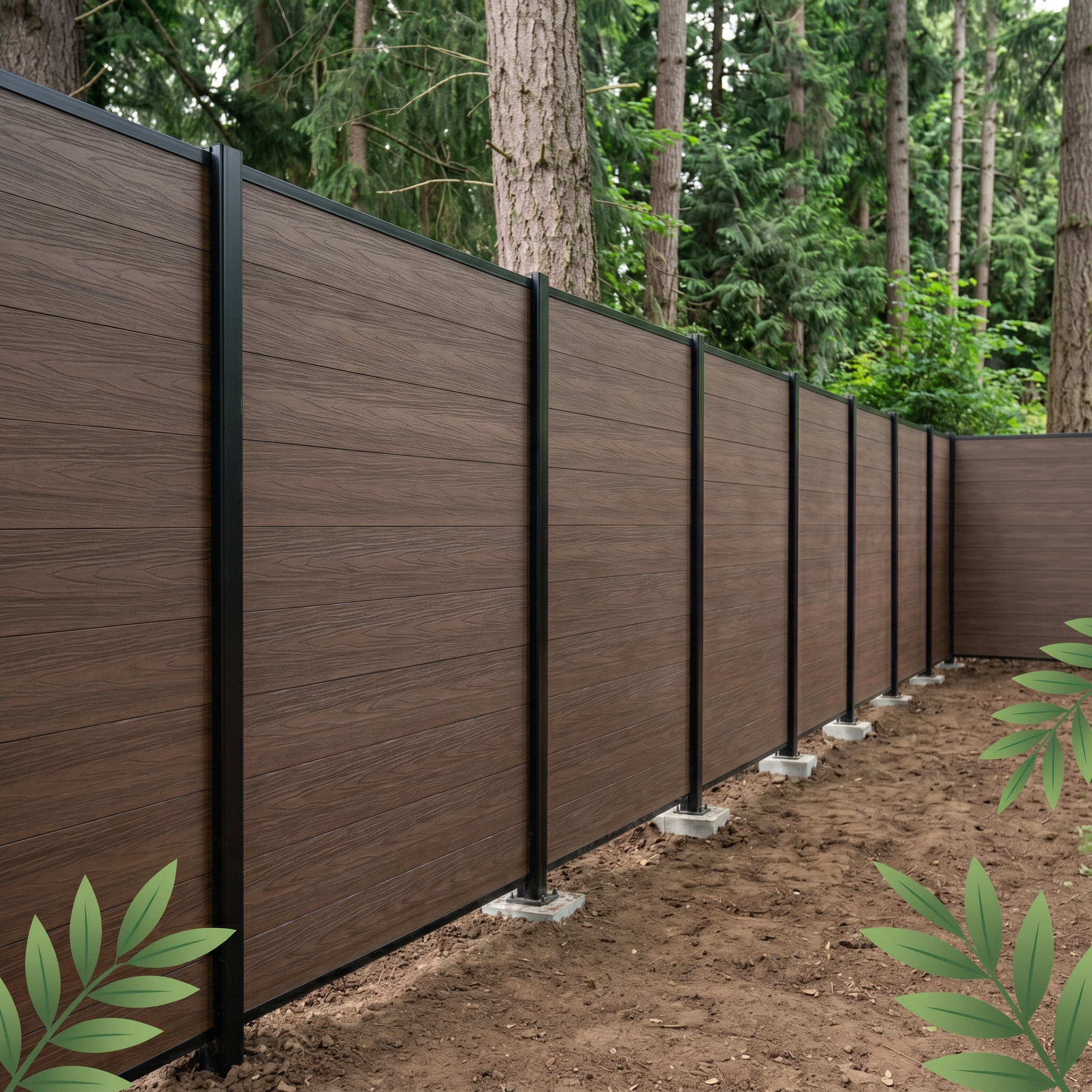
If you’re sourcing composite fencing in 2026, you’ve probably noticed one thing already:
Most “WPC fence price guides” online are written for homeowners buying a few panels — not for distributors, fence contractors, wholesalers, or importers moving container volumes.
And that’s the problem.
Because the difference between a “marketplace price” and your actual landed warehouse cost can easily be 40–70%.
This guide breaks down what wholesale buyers are actually paying for modern co-extrusion WPC fencing in 2026, including:
- Real FOB factory pricing
- Shipping and tariff math
- Landed cost examples
- Margin opportunities for dealers
- Common mistakes importers make
- Why warehouse inventory in the USA matters more than ever
At Treslam, we specialize in premium co-extrusion WPC fencing systems for distributors, contractors, and commercial projects across North America. Unlike suppliers selling both PVC and vinyl products, we focus specifically on high-quality composite fencing systems designed for durability, modern aesthetics, and fast installation.
We also maintain two warehouse locations in the United States — California and Georgia — allowing faster fulfillment and lower domestic shipping costs for contractors and dealers nationwide.
Stop Trusting Alibaba “Starting Prices”
Let’s be direct.
Those “$3/meter” or “$5/meter” listings you see on B2B marketplaces are usually not real-world pricing.
In most cases, those prices are:
- Boards only
- Entry-level first-generation material
- Missing posts, rails, and hardware
- Excluding packaging
- Quoted by trading companies rather than factories
- Using outdated product photos that don’t match the actual SKU
This creates massive confusion for first-time buyers.
A supplier might advertise a complete-looking fence system at an unrealistically low price, but once you request a full quotation with aluminum posts, accessories, and export packaging, the number changes dramatically.
For serious buyers, the only pricing that matters is:
- Complete set pricing
- Actual FOB pricing
- Real landed warehouse cost
First-Generation WPC vs Co-Extrusion WPC
One of the biggest pricing differences in the industry comes down to product type.
First-Generation WPC
Older-generation composite fencing usually includes:
- Basic embossed boards
- No protective cap layer
- Lower UV resistance
- Faster fading
- Higher scratch sensitivity
- Lower manufacturing cost
These systems are still sold because they’re cheaper.
But they’re no longer the preferred option for premium residential and commercial projects.
Modern Co-Extrusion WPC
Most professional contractors and distributors now prefer co-extrusion WPC fencing because it offers:
- Better UV protection
- Higher scratch resistance
- Improved stain resistance
- Longer color retention
- More premium appearance
- Lower maintenance over time
That’s why co-extrusion fencing costs more — but also commands significantly higher resale margins.
At Treslam, we focus exclusively on co-extrusion composite systems rather than low-end first-generation fencing.
Wholesale WPC Fence Prices in 2026
Below are the realistic wholesale ranges buyers are seeing for standard 6ft × 6ft composite fence systems in 2026.
| Configuration |
Typical FOB Price |
| Standard co-extrusion WPC + composite post |
$70–$90/set |
| Co-extrusion WPC + aluminum post |
$90–$120/set |
| Premium fluted composite fence |
$100–$140/set |
These numbers reflect complete systems including:
- Fence boards
- Posts
- Rails
- Caps
- Standard hardware
Pricing varies based on:
- Panel thickness
- Surface texture
- Aluminum profile size
- Color customization
- Packaging requirements
- Container quantity
Industry-wide sourcing reports show that co-extrusion products continue gaining market share because contractors prefer lower warranty risks and homeowners prefer premium aesthetics.
Why USA Warehouse Inventory Changes the Economics
One major issue importers face is cash flow.
Ordering directly from overseas factories often means:
- Full container purchases
- Long production lead times
- Ocean freight delays
- Port congestion risks
- Customs clearance uncertainty
- Large upfront capital requirements
That’s why local inventory matters.
At Treslam USA Warehouses, we stock inventory in:
This allows contractors and distributors to:
- Avoid waiting months for container arrivals
- Purchase smaller quantities
- Reduce inventory risk
- Get faster delivery across the United States
- Start projects immediately
For many dealers, fast availability is more valuable than chasing the absolute cheapest overseas quote.
Our Current Wholesale Pricing
For standard 6ft × 6ft co-extrusion WPC fence systems:
Starting from only $130 per set
That pricing includes complete fencing systems designed for fast installation and long-term outdoor durability.
Compared to many imported systems that end up significantly higher after freight, customs, and warehousing costs, domestic inventory can often reduce total project cost and operational headaches.
Shipping & Landed Cost Reality
A lot of buyers underestimate the true landed cost of fencing imports.
FOB pricing is only the beginning.
Additional costs usually include:
- Ocean freight
- Insurance
- Customs duties
- Port handling
- Inland trucking
- Warehouse unloading
- Domestic distribution
A typical container shipment to the United States can add:
| Cost Component |
Estimated Additional Cost |
| Ocean freight |
$12–$27/set |
| Insurance |
$1/set |
| Duties & tariffs |
$20–$35/set |
| Port & brokerage fees |
$5–$10/set |
That’s why a “cheap” overseas quote often becomes expensive once the product actually reaches your warehouse.
Retail Pricing vs Wholesale Opportunity
Here’s why distributors continue moving aggressively into composite fencing.
Retail pricing in North America remains significantly higher than wholesale sourcing costs.
Depending on design and channel, composite fence systems commonly retail between:
- $250–$450+ per section
- Higher for premium fluted designs
- Higher for modern architectural profiles
That leaves healthy room for:
- Contractors
- Dealers
- Regional distributors
- Installation companies
- Outdoor living retailers
Especially when offering differentiated modern designs rather than commodity flat-board fencing.
Commodity Fence vs Premium Fence
This is where many suppliers compete differently.
Commodity Composite Fence
Basic products usually compete on:
- Lowest price
- Standard colors
- Generic appearance
- High competition
Margins tend to compress quickly because many suppliers offer nearly identical products.
Premium Co-Extrusion Fence
Premium systems compete on:
- Modern aesthetics
- Fluted profiles
- Better textures
- Architectural appearance
- Better weather resistance
- Lower callback rates
These products are easier to position as premium outdoor upgrades rather than simply “fencing.”
That distinction matters because premium aesthetics often drive significantly stronger dealer margins.
Lead Times in 2026
Typical overseas lead times currently look like this:
| Stage |
Typical Timeline |
| Sample approval |
3–7 days |
| Production |
15–35 days |
| Ocean freight |
18–35 days |
| Customs & delivery |
5–10 days |
Total timeline:
Usually 6–10 weeks
That’s exactly why USA warehouse inventory has become a major competitive advantage for contractors trying to keep projects moving quickly.
Common Mistakes Buyers Make
1. Comparing incomplete quotes
Always compare:
- Complete sets
- Same post material
- Same hardware inclusion
- Same board thickness
- Same packaging standards
2. Buying only on lowest price
The cheapest system often becomes expensive through:
- Warranty claims
- Color fading
- Warping
- Damage during transport
- Installation issues
3. Ignoring local inventory availability
Long delays can cost more than small price differences.
Many contractors lose projects simply because they cannot deliver quickly enough.
4. Underestimating freight volatility
Shipping rates still fluctuate significantly depending on season, route, and fuel costs.
5. Choosing suppliers without real support
A reliable supplier should offer:
- Technical guidance
- Installation support
- Consistent inventory
- Fast communication
- Stable pricing
- Long-term partnership potential
Industry discussions among buyers repeatedly emphasize supplier consistency and support as major factors in successful fencing projects.
Why More Contractors Are Switching to WPC Fencing
Composite fencing continues growing because homeowners increasingly want:
- Low maintenance
- Modern appearance
- Long lifespan
- Weather resistance
- No painting or staining
- Better dimensional stability than wood
At the same time, contractors prefer systems that:
- Install faster
- Generate fewer callbacks
- Offer stronger margins
- Look visually premium
- Differentiate their projects
That combination is driving continued growth in the composite fencing sector globally.
Final Thoughts
The biggest mistake in the WPC fencing industry is assuming all “composite fence” products are the same.
They’re not.
Material quality, co-extrusion technology, post systems, inventory availability, and supplier reliability all dramatically affect your real cost and long-term profitability.
If you’re sourcing modern co-extrusion WPC fencing in 2026, focus on:
- Real landed costs
- Reliable inventory
- Faster fulfillment
- Product differentiation
- Long-term supplier support
At Treslam Official Website, we supply premium co-extrusion WPC fencing systems with warehouse inventory in both California and Georgia, helping contractors and distributors across the USA reduce lead times and access competitive wholesale pricing starting at only $130 per 6ft × 6ft set.

 EN
EN